
흡음재 시장은 크게 세 가지 소재군이 주도합니다: PET 흡음패널, 목모보드, 멜라민폼. 각 소재마다 뚜렷한 장점이 있으며, 최적의 선택은 공간 유형과 음향 목표에 따라 달라집니다. 이 가이드에서는 DIN 18041 기준과 주파수별 실측 데이터로 세 가지 소재를 비교합니다.
3대 흡음 소재
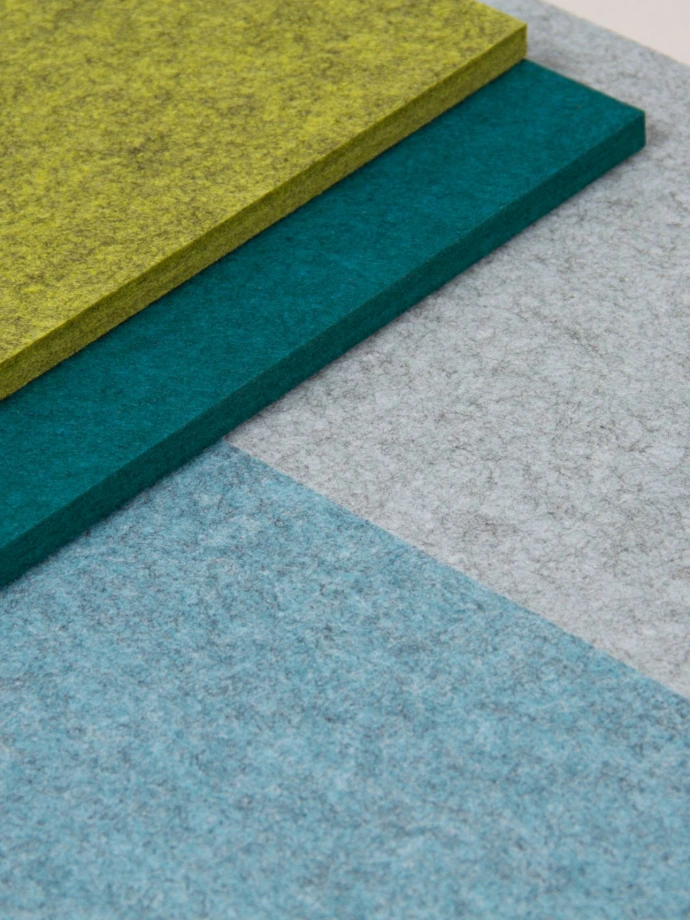
PET 흡음패널
폴리에스터 섬유 · 경량 · 107색
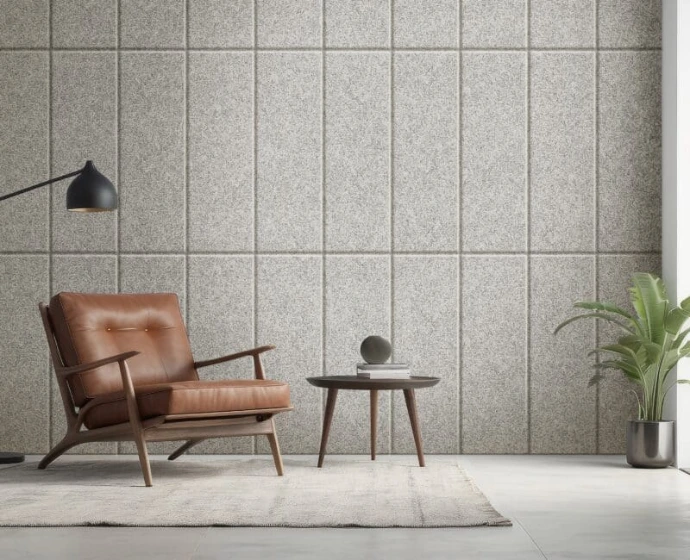
목모보드
목질 섬유 + 시멘트 · 천연 텍스처
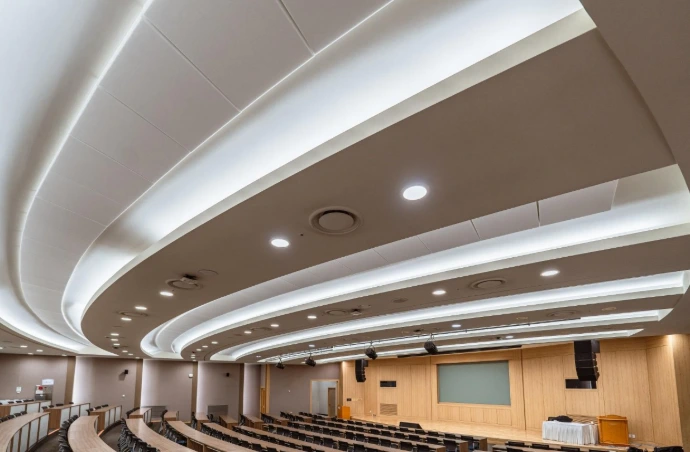
멜라민폼
초경량 · 광대역 흡음 · 경제적
NRC 흡음 성능 비교
| 소재 | NRC |
|---|---|
| 멜라민폼 50T | 0.95 |
| PET 24T | 0.90 |
| PET 12T | 0.84 |
| PET 9T | 0.79 |
| 목모보드 35T | 0.75 |
주파수별 흡음 특성 — DIN 18041 관점
NRC는 단순 평균값일 뿐입니다. DIN 18041 적합성을 판단하려면 250~2,000 Hz 대역의 주파수별 성능이 중요합니다. 각 소재는 고유한 흡음 프로파일을 가집니다:
차음과 흡음의 차이를 먼저 이해하고 싶다면? 차음 vs 흡음 기초 개념 가이드를 먼저 확인하세요.
PET 패널 — 중·고음역 전문가
PET 패널은 500 Hz 이상에서 탁월하며, 1,000 Hz 이상에서는 흡음계수가 1.0을 초과합니다. 12T 기준 250 Hz 흡음률은 0.62로 DIN 18041 Group B4 사무실 요건을 충족합니다. 24T에서는 흡음 프로파일이 400 Hz까지 확장되어(α ≥ 0.85) Group A3~A4 회의실에도 적합합니다. 핵심 장점: 107가지 맞춤 색상으로 성능과 디자인 유연성을 동시에 갖춘 유일한 소재입니다.
두께별 흡음계수 차이가 궁금하다면? PET 흡음재 두께별 비교(9T·12T·24T)를 자세히 알아보세요.
목모보드 — 중음역 앵커
목모보드는 중음역(500~1,000 Hz)을 중심으로 안정적이고 넓은 흡음을 제공합니다. 시멘트 기반으로 준불연(한국 기준) 등급이며 내구성이 매우 높습니다. 35T 기준 NRC 0.75는 PET보다 낮지만, 천연 텍스처와 시각적 따뜻함으로 로비, 레스토랑, 강당 등의 노출 천장 디자인에서 선호됩니다.
멜라민폼 — 초경량 광대역 흡음재
50T 기준 NRC 0.95로, 500 Hz 이상에서 뛰어난 흡음 성능(1,000~4,000 Hz에서 α ≥ 0.90)을 발휘합니다. 직부착 시 250 Hz 흡음은 보통 수준(0.20~0.50)이지만, 후면에 75 mm 공기층을 두면 중·저음역 성능이 크게 향상됩니다 — 250 Hz 흡음이 약 0.65~0.75로 상승하여 두꺼운 패널 시스템에 필적합니다.
50T 기준 약 1.6 kg/m²로 세 소재 중 가장 가볍습니다. 공기층 시공(천장 적용 시 표준 공법)을 하면 사무실과 스튜디오 모두에 적합한 광대역 흡음을 제공합니다.
공기층 효과 — 숨겨진 성능 향상 요인
공기층은 흡음재와 벽·천장 사이의 빈 공간을 말합니다. 50 mm 멜라민폼 패널 뒤에 75 mm 공기층을 두면 총 음향 깊이가 125 mm가 되며, 저·중음역 흡음 성능이 크게 향상됩니다.
| 주파수 | 50T 직부착 | 50T + 75 mm 공기층 (추정) | 향상폭 |
|---|---|---|---|
| 250 Hz | 0.20 | 0.65–0.75 | ▲ +225% |
| 500 Hz | 0.55 | 0.90–0.95 | ▲ +70% |
| 1,000 Hz | 0.90 | 0.95–1.00 | ▲ +8% |
| 2,000 Hz | 1.00 | 1.00 | — |
| 4,000 Hz | 0.92 | 0.95 | ▲ +3% |
* 직부착 데이터: Sound Service UK / SINOYQX 공개 스펙. 공기층 추정치는 음향 공학 원리 기반 — 공기층이 유효 음향 깊이를 늘려 흡음 곡선을 저주파 쪽으로 이동시킵니다.
실제 시공에서 천장 설치 멜라민폼은 거의 항상 공기층(천장 그리드 위의 플레넘 공간)을 포함합니다. 따라서 "공기층 포함" 데이터가 실제 설치 성능을 더 정확히 반영합니다.
"PET는 색상과 커스터마이징에서, 목모보드는 천연 미감에서, 멜라민폼은 무게 대비 흡음률에서 각각 우위 — 공기층을 더하면 멜라민폼은 전 대역을 커버합니다. 최고의 소재는 없습니다 — 공간의 용도가 답을 결정합니다."
상세 비교표
| 항목 | PET 흡음패널 | 목모보드 | 멜라민폼 |
|---|---|---|---|
| NRC (대표값) | 0.84 (12T) | 0.75 (35T) | 0.95 (50T) |
| 주파수 강점 | 중·고음역 (500 Hz+) | 중음역 (500–1,000 Hz) | 광대역 (500 Hz+; 공기층 시 250 Hz+) |
| 방화 등급 | 방염 | 준불연 | 방염(국내) / 준불연(국제) |
| 무게 (m²당) | 2.4 kg | 12 kg | ~1.6 kg |
| 색상 | 107색 맞춤 | 천연색 (5종) | 화이트/그레이 |
| 텍스처 | 펠트/패브릭 | 천연 목질 | 스폰지 |
| 내구성 | 높음 | 매우 높음 | 보통 |
| 시공성 | 용이 (접착/클립) | 전문 시공 필요 | 매우 용이 |
| DIN 18041 적합 | Group B4 (사무실) / A3-A4 (24T) | Group A (강당, 로비) | Group B4 (사무실, 공기층) / B3 |
DIN 18041 A/V 비율 — 얼마나 필요한가?
DIN 18041 Group B 공간은 A/V 비율(등가흡음면적 / 실 부피)로 필요한 음향 처리량을 결정합니다. 공간 유형별 요구 사항은 다음과 같습니다:
B3 — 식당 및 실험실 (A/V ≥ 0.20)
중간 체류 시간 공간. 100 m³ 공간에 최소 20 m²의 등가흡음면적이 필요합니다. 멜라민폼 50T 천장(공기층 포함) 또는 PET 9T 파티션이 효과적입니다.
PET 9T / 멜라민폼B4 — 사무실 (A/V ≥ 0.25)
종일 업무를 위한 소음 저감과 쾌적함. 150 m³ 사무실에 최소 37.5 m² 등가흡음면적 필요. 벽면 40%에 PET 12T 패널 시공이 표준 솔루션입니다.
PET 12T 권장B5 — 콜센터 (A/V ≥ 0.30)
최대 소음 저감이 필요한 공간. 벽과 천장 모두 처리가 필요합니다. PET 12T 벽면 + 멜라민폼 천장 조합이 검증된 솔루션입니다.
PET 12T + 멜라민폼 조합Group A3/A4 — 회의실
명료도를 위한 잔향 시간 제어. PET 24T 또는 목모보드가 목표 T값 달성에 필요한 중음역 흡음을 제공합니다.
PET 24T / 목모보드공간별 최적 조합 추천
사무실
PET 12T 벽면 + 카펫타일 바닥이 가장 보편적인 조합입니다. 107색 중 기업 CI에 맞는 색상을 선택하여 공간 정체성을 표현할 수 있습니다.
PET 12T 권장교육 시설
넓은 면적의 잔향 제어를 위해 PET 24T 또는 목모보드를 사용합니다. 다중이용시설이므로 방염 인증 서류 확인이 필수입니다.
PET 24T / 목모보드스튜디오
멜라민폼 50T 공기층 시공(광대역) + PET 24T(중·저음역)로 전 대역을 커버합니다. 적절한 반사면 배치가 올바른 음향 설계의 핵심입니다.
멜라민폼 + PET 24T레스토랑 / 카페
다이닝 공간에서는 미관과 음향 모두 중요합니다. 세 가지 소재 모두 고유한 장점이 있으며, 천장 구조와 디자인 의도에 따라 선택합니다.
다이닝 공간에서 미관이 중요할 때 — PET는 디자인 유연성으로 널리 사용됩니다. 107색과 다양한 패턴 옵션을 제공합니다.
디자인 중심 선택독특한 천연 텍스처가 강점. 인테리어와 조화되는 맞춤 마감을 위해 팬톤 전 색상 범위로 도장 가능합니다.
천연 텍스처 선택천장 두께 제한 없이 100T 이상도 가능. 중·저음역 흡음이 필요한 노출 천장에 최적. 초경량(탈락 시 안전), 국제 기준 준불연 등급.
노출 천장 최우선 선택자주 묻는 질문
Q. 한 공간에 서로 다른 흡음재를 혼용할 수 있나요?
네, 오히려 권장됩니다. 예를 들어 벽면에 PET 패널(중·고음역)을 설치하고 천장에 멜라민폼 50T(공기층 포함 광대역)를 조합하면 더 넓은 주파수 범위를 커버할 수 있습니다. DIN 18041은 모든 표면의 등가흡음면적을 합산하여 계산하므로, 재료 혼용으로 250~2,000 Hz 전 대역 목표 달성에 유리합니다.
Q. 세 가지 재료 모두 방염 인증이 있나요?
네. PET 패널은 한국 소방법 기준 방염 인증을 보유합니다. 멜라민폼은 국내에서 방염, 국제 기준으로는 준불연 등급입니다. 목모보드는 준불연 등급을 달성합니다. 세 재료 모두 한국 소방법에 따라 다중이용시설에 사용 가능합니다.
Q. 흡음재 필요 수량은 어떻게 계산하나요?
DIN 18041 Group B4(사무실) 기준: 실 부피(m³) × 0.25 = 필요 등가흡음면적(m²). 이를 소재의 NRC로 나누면 필요 시공 면적을 산출할 수 있습니다. 예시: 150 m³ 공간에 37.5 m² 흡음이 필요하며, PET 12T(NRC 0.84) 기준 약 45 m² 시공이 필요합니다.
공식은 출발점일 뿐 — 결론이 아닙니다
위의 A/V 비율 계산은 신뢰할 수 있는 기준선을 제공하지만, 실제 음향 요구사항은 공간 유형, 재실 인원, 천장 높이, 가구 밀도, 실제 사용 방식에 따라 크게 달라집니다. 동일한 면적의 두 공간도 음향적으로는 매우 다르게 작동할 수 있습니다.
토넥스는 시공 전 3D 음향 시뮬레이션을 수행하며, 가청화(auralization)를 통해 패널 설치 전에 처리된 공간이 어떻게 들리는지 미리 체험할 수 있습니다. 시공 후에는 현장 RT60 측정으로 결과를 확인합니다. 이러한 시공 전·후 검증이 전문 음향 솔루션과 단순 추측의 차이입니다.
음향 전문가를 선정할 때는 시공 전 시뮬레이션과 시공 후 측정을 모두 제공하는 업체를 선택하세요 — 단순 제품 공급이 아닌.
우리 공간에 최적인 음향 솔루션을 찾으세요
토넥스는 PET, 목모보드, 멜라민폼 — 모든 흡음 소재를 한 곳에서 제공하는 종합 음향 솔루션 파트너입니다.
PET 흡음패널 보기 → 목모보드 보기 → 멜라민폼 보기 →